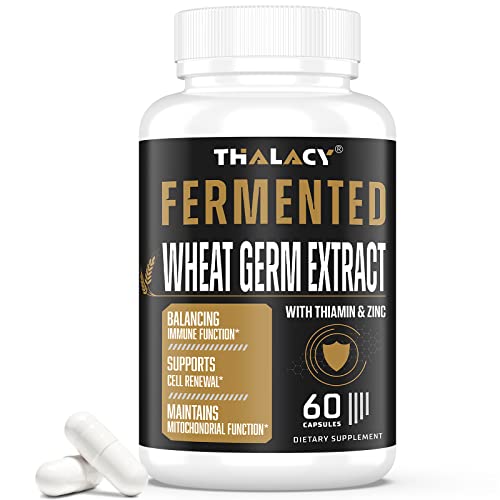
Two naturally occurring compounds have drawn serious scientific attention for their ability to stimulate autophagy: the cellular recycling process that clears damaged proteins and organelles and declines as we age. Spermidine, a polyamine found in wheat germ, soybeans, and aged cheese, activates broad autophagy pathways. Urolithin A, produced in the gut from ellagitannins in pomegranates and walnuts, triggers a more targeted form called mitophagy, which specifically removes worn-out mitochondria.
Both compounds are naturally occurring, carry a reasonable safety profile at studied doses, and are now available as supplements. But their mechanisms, research maturity, and practical use cases differ in ways that matter. This article breaks down what the science currently shows about each, where the human evidence is stronger, and how to think about them side by side.
Key Takeaways
- Spermidine activates broad autophagy across multiple cellular pathways; Urolithin A primarily activates mitophagy: targeted recycling of damaged mitochondria via the PINK1-Parkin pathway.
- Urolithin A has more published, placebo-controlled human trial data, particularly for muscle endurance and mitochondrial biomarkers in middle-aged and older adults [1][2].
- Urolithin A production from food varies dramatically by individual microbiome; many people do not convert dietary ellagitannins into meaningful levels of Urolithin A [3], making supplementation a practical consideration for some.
- Spermidine supplements are typically wheat germ-derived: individuals with wheat allergies should verify the source before use.
- Neither compound has been evaluated by the FDA; both carry encouraging but still-maturing human evidence, and this information is not medical advice.
Autophagy and Mitophagy: The Cellular Housekeeping Distinction
Autophagy, from the Greek for ‘self-eating’, is the process by which cells package and break down their own damaged or excess components, recycling the building blocks for reuse. It acts as quality control at the cellular level: without it, misfolded proteins and dysfunctional organelles accumulate over time, a pattern strongly associated with aging and age-related disease.
Mitophagy is a specific subset of autophagy focused exclusively on mitochondria. Mitochondria are the cell’s energy generators, and they accumulate damage through normal metabolic activity. When mitophagy slows, defective mitochondria linger and generate excess reactive oxygen species, contributing to broader cellular dysfunction. This distinction matters when comparing these two compounds: spermidine triggers general autophagy across multiple intracellular pathways, while Urolithin A appears to act primarily through the mitophagy route via the PINK1-Parkin signaling axis.
Spermidine: A Polyamine With Broad Autophagy Activity
Spermidine is an endogenous polyamine: your body synthesizes it, and you also absorb it from foods such as wheat germ, soybeans, mushrooms, and aged cheeses. Spermidine falls with age in T cells from human donors and in mouse muscle, but whole blood from 78 people did not show a steady fall with age, and no human supplementation study has measured a rise in plasma spermidine; researchers are still exploring whether diet or supplements could support cellular housekeeping [7][8][9][10]. Its proposed primary mechanism centers on inhibiting EP300, an acetyltransferase enzyme whose suppression activates the autophagy program upstream of multiple downstream effectors.
Research note: In an 8-week trial of 1 g/day urolithin A in 20 resistance-trained male athletes, C-reactive protein increased significantly from baseline in the urolithin A group, although the authors’ conclusion describes a reduced inflammation response [16].
Animal studies have shown spermidine supplementation to extend lifespan in multiple model organisms, and cardiovascular, neuroprotective, and immune-related effects have been explored in rodent models. A small but growing number of human observational and interventional studies have examined spermidine intake in relation to cognitive and cardiovascular outcomes. In the 12-month SmartAge trial of wheat germ extract, adverse events were balanced with placebo, but long-term safety has not been established [11]. Most human trial data to date come from relatively small, short-duration studies. Long-term human safety data remain limited. Because most supplements derive spermidine from wheat germ, individuals with wheat allergies should verify the source carefully before supplementing.

Urolithin A: A Gut-Derived Mitophagy Activator
Urolithin A is not directly consumed from food; it is produced by specific gut bacteria when they metabolize ellagitannins found in pomegranates, walnuts, and certain berries. Because this conversion depends heavily on the composition of an individual’s microbiome, a substantial portion of adults produce little to no Urolithin A from dietary sources alone [3]a gap that has motivated the development of direct supplementation bypassing gut conversion entirely.
A landmark early human study found that Urolithin A supplementation was safe and induced a molecular signature consistent with improved mitochondrial and cellular health, including changes in gene expression pathways linked to mitochondrial quality control [4]. This work established that the compound could cross from preclinical models into controlled human trials and provided the biological rationale for subsequent efficacy studies.
What Human Trials Have Found
Urolithin A and spermidine each have placebo-controlled human trials in different populations, with different doses and endpoints, so their evidence cannot be ranked, and no trial has compared them [2][1][11][12]. In a randomized trial in 88 untrained overweight adults aged 40 to 64, urolithin A did not significantly change the primary endpoint, peak power output, versus placebo; hamstring peak torque rose 12% with 500 mg, a secondary endpoint, and the sponsor was Amazentis, the company that makes the product tested [1]. In 66 adults aged 65 to 90 given 1000 mg/day for 4 months, neither primary endpoint (walk distance, maximal muscle ATP production) improved significantly versus placebo; muscle endurance, a secondary endpoint, improved at the first test point, and the trial was funded by Amazentis, the maker of the product tested [2]. These are double-blind, placebo-controlled designs, which sit near the top of the evidence hierarchy for nutritional interventions.
The flagship trials of both compounds missed their primary endpoints, two for urolithin A and SmartAge for spermidine
Neither primary endpoint improved
At 1000 mg a day for 4 months, walk distance and maximal muscle ATP production did not improve significantly versus placebo.
Peak power output unchanged
At 500 or 1000 mg a day for 4 months in untrained overweight adults, the primary endpoint did not differ significantly from placebo.
Memory endpoint not met
Wheat germ extract delivering 0.9 mg of spermidine a day for 12 months did not change mnemonic discrimination (P = .47).
Interval crossed zero
After 3 months, memory contrast was .17 (95% CI -.01 to .35), and the authors based their reading on effect sizes, not significance.
Neither compound has a flagship human trial that met its primary endpoint.
Randomised placebo-controlled trials. The spermidine material was a wheat germ extract, not pure spermidine. Source: Liu et al., JAMA network open 2022; Singh et al., Cell reports. Medicine 2022; Schwarz et al., JAMA Network Open 2022; Wirth et al., Cortex 2018
Embed this chart
Free to reuse on your site. Copy the code below; please keep the credit link.
Spermidine’s human evidence is limited: SmartAge, a 12-month trial in 100 older adults with subjective cognitive decline, did not meet its primary memory endpoint (P = .47), and most mechanistic insights remain in preclinical models [11][13]. Neither compound has been evaluated by the FDA to diagnose, treat, cure, or prevent any disease, and neither should be treated as a substitute for medical care.
Muscle Aging and Sarcopenia: A Shared Area of Interest
One of the most clinically meaningful areas of overlap between the two compounds is age-related muscle loss, or sarcopenia. Skeletal muscle depends heavily on healthy mitochondria for energy during contraction, and mitochondrial dysfunction is considered a meaningful contributor to the decline in muscle mass and strength that accompanies aging [5]. By improving mitochondrial quality control, both compounds may theoretically support muscle resilience, though the controlled human evidence is stronger for Urolithin A in this specific context.
Broad autophagy also plays a role in protein quality control within muscle fibers. As damaged proteins accumulate in aging muscle, contractile function can decline. Spermidine’s wider autophagy activation may address cellular protein burden in ways that complement the more targeted mitophagy emphasis of Urolithin A, though no head-to-head human trials comparing the two compounds currently exist.
In mice the muscle picture for spermidine is mixed: in one study spermidine in drinking water did not boost overload-induced muscle growth and mean muscle fibre area went down, and another found that long-term spermidine lowered gastrocnemius muscle cross-sectional area [14][15].
Neurological Aging: Mitophagy as a Shared Pathway of Preclinical Interest
Both compounds have attracted attention in the context of brain aging, where autophagic clearance of misfolded proteins is especially relevant. Preclinical research in Alzheimer’s disease models found that activating mitophagy was associated with reduced amyloid-beta and tau pathology and reversal of cognitive deficits in animal models [6]. While these findings were not from human clinical trials, they illustrate why autophagy inducers, whether acting broadly like spermidine or selectively like Urolithin A, are generating interest in neurodegenerative disease research.
For both compounds, translation of these preclinical neuroprotective signals into demonstrated human benefit remains an open research question. The biology is compelling and the mechanistic rationale is grounded, but it would be premature to characterize either compound as a cognitive health intervention based on available human data.
🛒 Where to Buy Spermidine
- Oxford Healthspan Primeadine Original
capsules, 1 mg spermidine per capsule, 3 capsules/day recommended: Whole-food wheat germ concentrate; includes other natural polyamines; most-cited premium brand in longevity community; batches independently tested by third-party labs per the brand. - Double Wood Supplements Spermidine
capsules, 10 mg wheat germ extract (standardized to provide spermidine) per capsule: Budget-accessible entry point; clearly labeled wheat germ extract source; Double Wood is a reputable US brand with good COA transparency. - Renue By Science Spermidine
capsules, 10 mg wheat germ extract per capsule, 1-2 capsules/day: Longevity-focused brand known for NMN and NAD precursors; offers spermidine as part of a stack ecosystem; good option for existing Renue customers
As an Amazon Associate we earn from qualifying purchases. Spermidine labels are easy to misread: the headline number is usually wheat germ extract weight, which can be several hundred times the spermidine inside it. Choose a product that states the milligrams of actual spermidine per serving along with the standardization percentage behind that figure, check the allergen disclosure if you avoid wheat, and with synthetic spermidine trihydrochloride confirm whether the stated milligrams refer to the salt or to the free base.
A Note on the Evidence
The human clinical evidence for both spermidine and Urolithin A is still developing: most trials are short-term, involve relatively small samples, and long-term human safety data are limited for both compounds; these statements have not been evaluated by the FDA, and neither spermidine nor Urolithin A is intended to diagnose, treat, cure, or prevent any disease. This article is informational only, and individuals who are pregnant, nursing, taking prescription medications, or managing chronic health conditions should consult a qualified healthcare provider before beginning supplementation.
Frequently Asked Questions
Can you take spermidine and Urolithin A together?
No published human trial has directly tested this combination, so there is no clinical evidence on whether co-administration is more effective than either compound alone. Because the two appear to work through partially complementary pathways, general autophagy versus selective mitophagy, the theoretical rationale for combining them is discussed in longevity research circles, but safety and efficacy of a stack have not been formally evaluated in humans. Consult a healthcare provider before combining novel supplements.

Which compound has stronger human trial evidence right now?
Neither can be ranked above the other. Both urolithin A trials missed their primary endpoints while improving some secondary outcomes such as muscle endurance; SmartAge, the largest spermidine trial, missed its primary memory endpoint; and no trial has compared the two [2][1][11][12].
Does everyone produce Urolithin A naturally from food?
No. Urolithin A production from dietary ellagitannins depends on having specific gut bacteria capable of performing the conversion [3]. Research indicates that a substantial portion of adults, potentially the majority, produce little to no Urolithin A from pomegranate or walnut consumption. This variability is one reason direct supplementation with pre-formed Urolithin A has been developed and studied.
What did the first human safety study on Urolithin A find?
A controlled human study found that Urolithin A supplementation was safe and produced a molecular signature consistent with improved mitochondrial and cellular health, including changes in gene expression related to mitochondrial quality control and cellular stress response [4]. This was an important step in establishing that the compound’s preclinical effects could be detected in a human biological context.
Are either of these compounds relevant to brain health?
Preclinical research found that activating mitophagy was associated with reduced Alzheimer’s-related amyloid-beta and tau pathology and reversal of cognitive deficits in animal models [6]. However, these are not human clinical trials. Whether spermidine or Urolithin A provides demonstrable cognitive benefits in people is still an open research question, and neither should be described as a treatment for any neurological condition.
Is spermidine safe for people with wheat allergies?
Spermidine supplements are commonly derived from wheat germ extract. People with wheat allergies or celiac disease should carefully verify the source and manufacturing process of any specific product before use and discuss the decision with a qualified healthcare provider, as cross-contamination risk and ingredient sourcing vary by brand.
References
- Singh A et al. Urolithin A improves muscle strength, exercise performance, and biomarkers of mitochondrial health in a randomized trial in middle-aged adults. Cell reports. Medicine (2022). PMID 35584623
- Liu S et al. Effect of Urolithin A Supplementation on Muscle Endurance and Mitochondrial Health in Older Adults: A Randomized Clinical Trial. JAMA network open (2022). PMID 35050355
- D'Amico D et al. Impact of the Natural Compound Urolithin A on Health, Disease, and Aging. Trends in molecular medicine (2021). PMID 34030963
- Andreux PA et al. The mitophagy activator urolithin A is safe and induces a molecular signature of improved mitochondrial and cellular health in humans. Nature metabolism (2019). PMID 32694802
- Dao T et al. Sarcopenia and Muscle Aging: A Brief Overview. Endocrinology and metabolism (Seoul, Korea) (2020). PMID 33397034
- Fang EF et al. Mitophagy inhibits amyloid-β and tau pathology and reverses cognitive deficits in models of Alzheimer's disease. Nature neuroscience (2019). PMID 30742114
- Ghada Alsaleh et al. Autophagy in T cells from aged donors is maintained by spermidine and correlates with function and vaccine responses. eLife (2020). PMID 33317695
- Uchitomi R et al. Metabolomic Analysis of Skeletal Muscle in Aged Mice. Scientific reports (2019). PMID 31320689
- Stefania Pucciarelli et al. Spermidine and Spermine Are Enriched in Whole Blood of Nona/Centenarians. Rejuvenation Research (2012). PMID 22950434
- Thorup CV et al. POLYamine treatment in elderly patients with Coronary Artery Disease (POLYCAD): study protocol for a Danish randomised, double-blind, placebo-controlled trial of spermidine treatment versus placebo. Trials (2025). PMID 41168834
- Claudia Schwarz et al. Effects of Spermidine Supplementation on Cognition and Biomarkers in Older Adults With Subjective Cognitive Decline. JAMA Network Open (2022). PMID 35616942
- Borsky P et al. Distinct roles of urolithin A and spermidine in mitophagy and autophagy: implications for dietary supplementation. Nutrition research reviews (2025). PMID 41404767
- Uemura T et al. Polyamine metabolism as a regulator of cellular and organismal aging. Amino acids (2026). PMID 41617890
- Iwata T et al. Effect of spermidine intake on overload-induced skeletal muscle hypertrophy in male mice. Physiological reports (2025). PMID 39910742
- Zhang L et al. Spermidine-Activated Satellite Cells Are Associated with Hypoacetylation in ACVR2B and Smad3 Binding to Myogenic Genes in Mice. Journal of agricultural and food chemistry (2018). PMID 29224337
- Zhao H et al. Assessment of Urolithin A effects on muscle endurance, strength, inflammation, oxidative stress, and protein metabolism in male athletes with resistance training: an 8-week randomized, double-blind, placebo-controlled study. Journal of the International Society of Sports Nutrition (2024). PMID 39487653
These statements have not been evaluated by the Food and Drug Administration. This information is not intended to diagnose, treat, cure, or prevent any disease. Content is for informational purposes only and is not medical advice; consult a qualified healthcare provider before starting any supplement. As an Amazon Associate we earn from qualifying purchases.